
23-06-2026
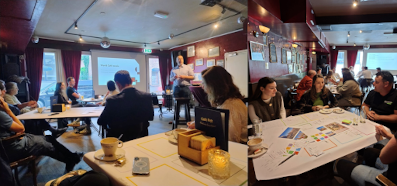
On 11 June 2026, DECUB organized a World Café in Café Pelt, located in the heart of Heerlen. The event was held in cooperation with The European Center for Circular Building and Transformation (ECCBT) and brought together approximately 25 participants from a wide range of backgrounds to explore challenges and opportunities related to urban transformation.
The session was attended by representatives from the Municipality of Heerlen, professionals from the design and construction sector, demolition specialists, experts in the circular economy, representatives from the heritage and culture sector, and local neighbourhood stakeholders.
Five participants from Zuyd University of Applied Sciences, including DECUB researchers and facilitators, acted as moderators and table hosts throughout the event. In addition, five students from the Academy of Built Environment participated. Four of these students are currently involved in the DECUB Design Atelier and have developed transformation scenarios for the project’s case study: the former DSM-Firmenich headquarters in Heerlen.
Exploring Transformation Scenarios
The former DSM-Firmenich headquarters served as the central case study for the discussions. Participants explored and evaluated different transformation scenarios developed within the DECUB Design Atelier, reflecting on their feasibility, impact, and value from multiple perspectives.
Engaging Dialogue Through Serious Gaming
The World Café methodology once again proved effective in bringing together both experts and non-experts to discuss complex and technical subjects on equal footing. Participants actively contributed their perspectives, creating a dynamic and inclusive exchange of ideas.
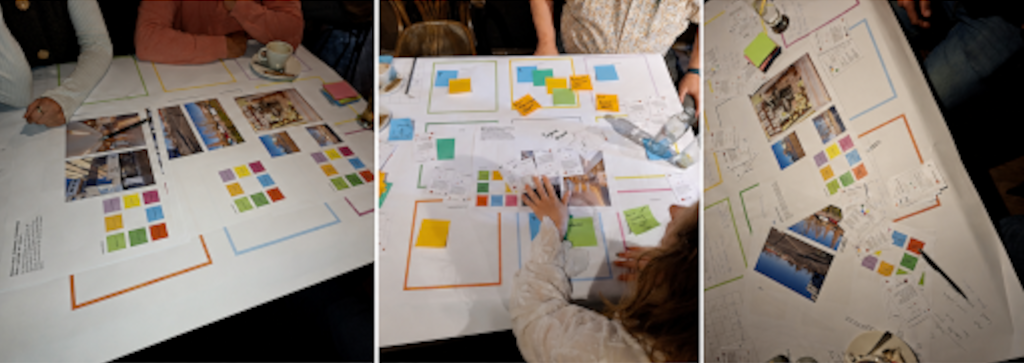
The serious gaming approach helped make the session both engaging and enjoyable. By combining structured discussion with interactive elements, the format stimulated lively conversations and encouraged participants to explore different viewpoints.
A particularly noteworthy innovation was the introduction of a role-playing element—the first time this approach has been tested within a DECUB World Café. During the final discussion round, participants were invited to evaluate transformation scenarios from the perspective of a specific stakeholder profile. This exercise enabled participants to better understand the diverse values, priorities, and interests that influence transformation projects and decision-making processes.
Learning from Diversity
One of the strengths of the World Café format lies in its flexibility. With multiple moderators and participants from diverse professional and personal backgrounds, each table approached discussions slightly differently. As a result, the game generated varying levels of depth, insights, and outcomes across the different groups, enriching the overall learning experience.
The Heerlen World Café demonstrated the value of collaborative dialogue in addressing complex urban transformation challenges and provided valuable insights for the ongoing development of the DECUB project.
Looking Ahead
The insights gathered during the Heerlen World Café will contribute to the further development and evaluation of transformation strategies within the DECUB project. By bringing together citizens, professionals, policymakers, and students, the event demonstrated the importance of inclusive dialogue in shaping sustainable, circular, and resilient urban futures.